Real vs Fake Alexandrite
Worried your Alexandrite might be fake? Here’s how Alexandrite is imitated and the quick checks that tell the real thing apart — no lab needed for a first pass.
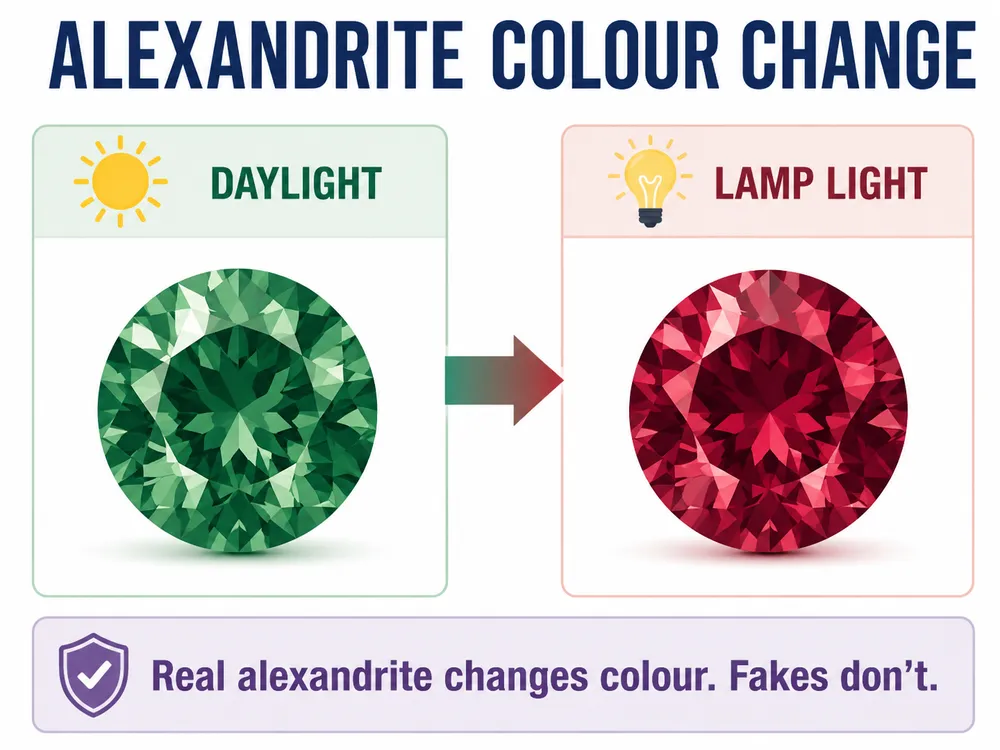
How Alexandrite is faked
The usual imitations: synthetic colour-change corundum or spinel (most cheap "alexandrite"), and glass.
Real vs fake Alexandrite at a glance
| Genuine Alexandrite | Imitation | |
|---|---|---|
| Colour change | Green → red | Grey-blue → purple (synthetic) |
| Price | Rare, very costly | Cheap = synthetic |
| Proof | Lab report | — |
How to tell real Alexandrite
- True alexandrite changes green (daylight) to red/purplish-red (incandescent); the common synthetic simulant goes grey-blue to amethyst-purple — a different, weaker change.
- Natural alexandrite is extremely rare and expensive, so affordable "alexandrite" is almost always synthetic.
- A lab report is essential before paying natural prices.
Alexandrite guide

Frequently asked questions
Is cheap alexandrite real?
Almost never. Most affordable "alexandrite" is synthetic corundum or spinel with a blue-to-purple change, not the green-to-red of true alexandrite. Natural alexandrite is rare and costly — verify with a lab report.
What is Alexandrite worth?
Real Alexandrite and its imitations differ a lot in value — see the value guide. Imitations (glass, dyed or reconstituted material) are worth a small fraction of the genuine stone.