Real vs Fake Amber
Worried your Amber might be fake? Here’s how Amber is imitated and the quick checks that tell the real thing apart — no lab needed for a first pass.
How Amber is faked
The usual imitations: copal (young, cheap resin), plastic, glass and "pressed" reconstituted amber.
Real vs fake Amber at a glance
| Genuine Amber | Imitation | |
|---|---|---|
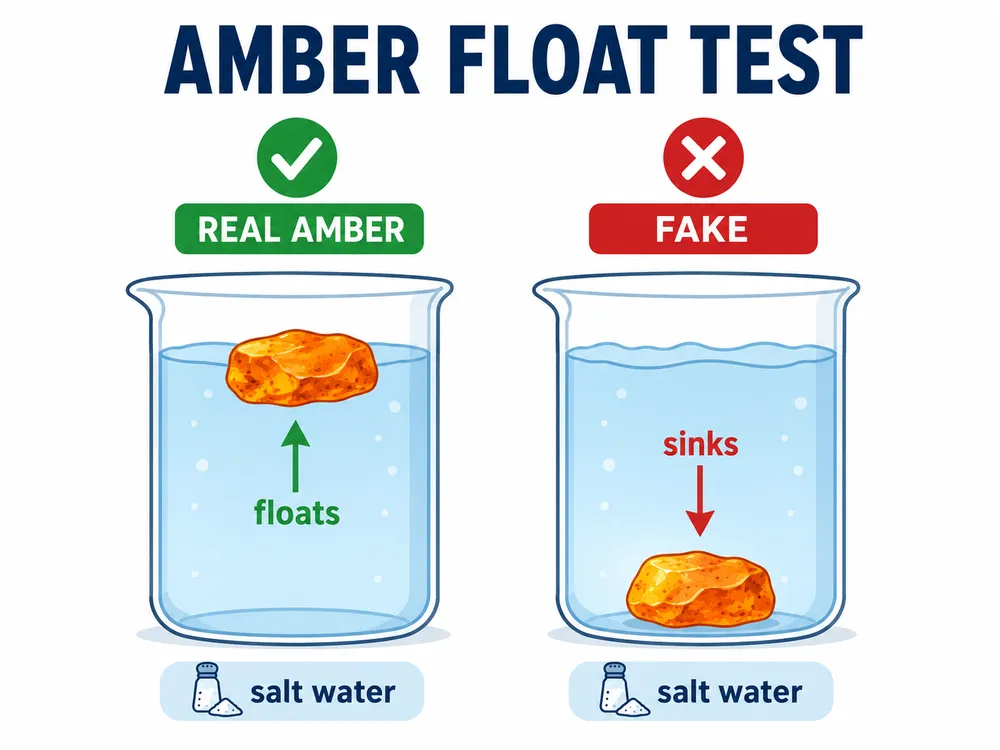
| Salt water | Floats | Plastic/glass sink |
| Rubbed | Builds static, lifts paper | Little to none |
| Hot pin | Pine-resin smell | Acrid (plastic) |
How to tell real Amber
- Salt-water float test: real amber floats in heavily salted water; most plastics and glass sink.
- Rubbed briskly, real amber builds static and lifts a scrap of paper.
- A hot needle on a hidden spot smells of pine resin on amber, acrid/chemical on plastic; acetone makes copal tacky but leaves amber unmarked.
Amber guide

Frequently asked questions
Is my amber real or plastic?
Real amber floats in saturated salt water, builds static when rubbed, and smells piney (not acrid) under a hot pin. Plastic and glass usually sink and smell chemical; "copal" is real resin but young and softer, going tacky with acetone.
What is Amber worth?
Real Amber and its imitations differ a lot in value — see the value guide. Imitations (glass, dyed or reconstituted material) are worth a small fraction of the genuine stone.