Real vs Fake Aquamarine Beryl
Worried your Aquamarine Beryl might be fake? Here’s how Aquamarine Beryl is imitated and the quick checks that tell the real thing apart — no lab needed for a first pass.
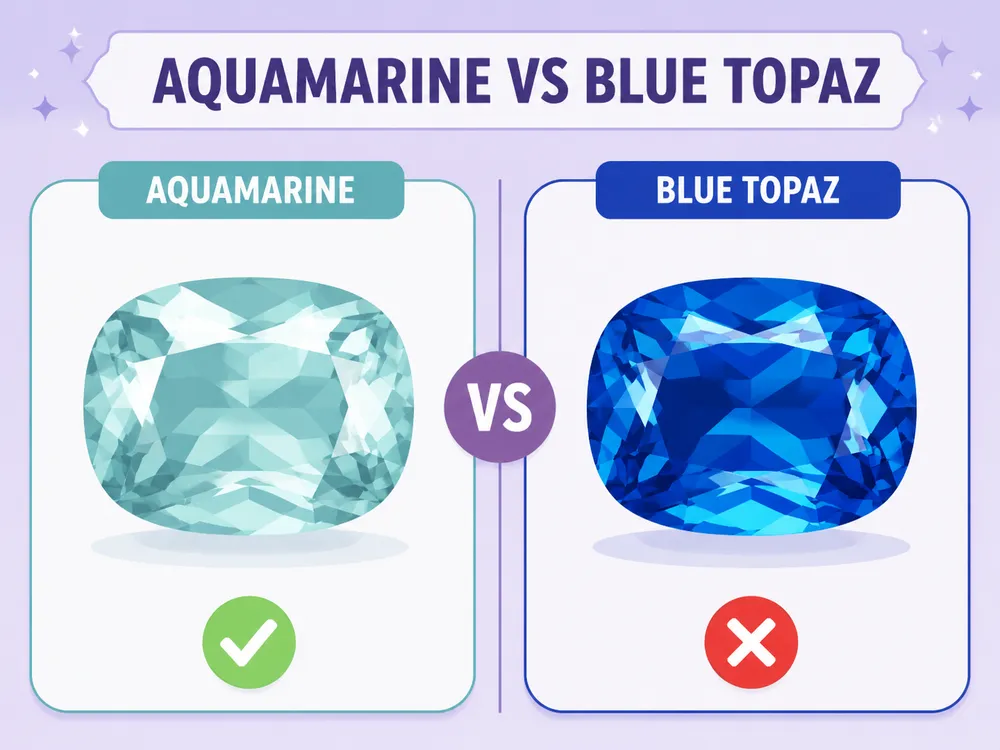
How Aquamarine Beryl is faked
The usual imitations: blue glass, irradiated blue topaz, and synthetic spinel sold as aquamarine.
Real vs fake Aquamarine Beryl at a glance
| Genuine Aquamarine Beryl | Imitation | |
|---|---|---|
| Colour | Pale blue / blue-green | Electric blue (topaz) |
| Pleochroism | Faint colour shift | None (glass/spinel) |
| Bubbles | None | Round bubbles (glass) |
How to tell real Aquamarine Beryl
- Glass shows round bubbles and warms quickly; aquamarine is cooler and harder (scratches glass).
- Blue topaz substitutes are often a deeper, more electric blue — natural aquamarine leans pale blue to blue-green.
- Aquamarine is weakly pleochroic (slightly different blue at different angles); glass and spinel are not.
Aquamarine Beryl guide

Frequently asked questions
How can I tell real aquamarine?
Real aquamarine is a pale blue-to-blue-green beryl, cool to the touch and hard enough to scratch glass, with faint pleochroism. Glass has bubbles and warms fast; irradiated blue topaz is usually a deeper, more electric blue than natural aquamarine.
What is Aquamarine Beryl worth?
Real Aquamarine Beryl and its imitations differ a lot in value — see the value guide. Imitations (glass, dyed or reconstituted material) are worth a small fraction of the genuine stone.