Real vs Fake Citrine
Worried your Citrine might be fake? Here’s how Citrine is imitated and the quick checks that tell the real thing apart — no lab needed for a first pass.
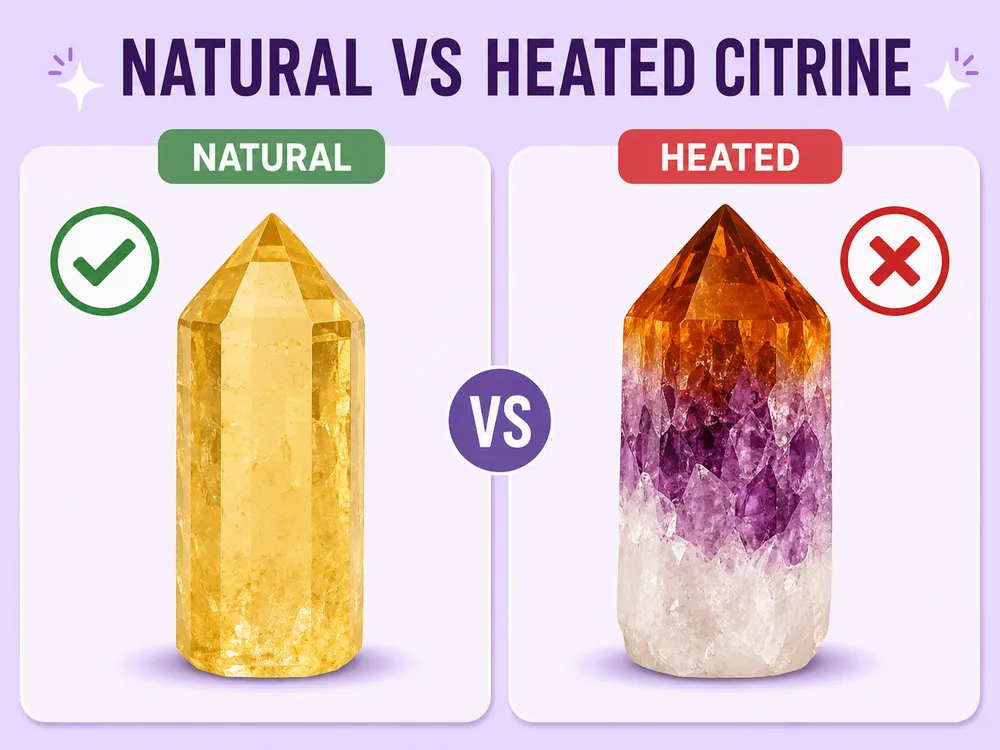
How Citrine is faked
The usual imitations: heat-treated amethyst sold as natural citrine (it is real quartz, just not naturally that colour).
Real vs fake Citrine at a glance
| Genuine Citrine | Imitation | |
|---|---|---|
| Colour | Even pale-to-gold | White base, burnt-orange tips |
| Origin | Naturally yellow | Heated amethyst |
| Note | Real quartz either way | Should be sold as "treated" |
How to tell real Citrine
- Heated amethyst citrine has a white base and concentrated orange-to-brown "burnt" tips, often still in the amethyst geode shape.
- Natural citrine is a more even, pale-to-golden yellow, rarely the deep reddish-orange of heated stones.
- It is not fake quartz — but it should be sold as "heat-treated", and natural citrine costs more.
Citrine guide

Frequently asked questions
Is heat-treated citrine fake?
No — it is genuine quartz, just heat-treated amethyst rather than naturally yellow. The tells are a white base with burnt-orange tips and a geode shape. It should be disclosed as treated; untreated natural citrine is paler and more valuable.
What is Citrine worth?
Real Citrine and its imitations differ a lot in value — see the value guide. Imitations (glass, dyed or reconstituted material) are worth a small fraction of the genuine stone.