Real vs Fake Diamond
Worried your Diamond might be fake? Here’s how Diamond is imitated and the quick checks that tell the real thing apart — no lab needed for a first pass.
How Diamond is faked
The usual imitations: cubic zirconia (CZ), moissanite, white sapphire/topaz and glass sold or mistaken as diamond.
Real vs fake Diamond at a glance
| Genuine Diamond | Imitation | |
|---|---|---|
| Fog test | Clears instantly | CZ/glass stay fogged |
| Fire & doubling | No facet doubling | Moissanite doubles + extra fire |
| Hardness | Mohs 10 | CZ softer, heavier |
How to tell real Diamond
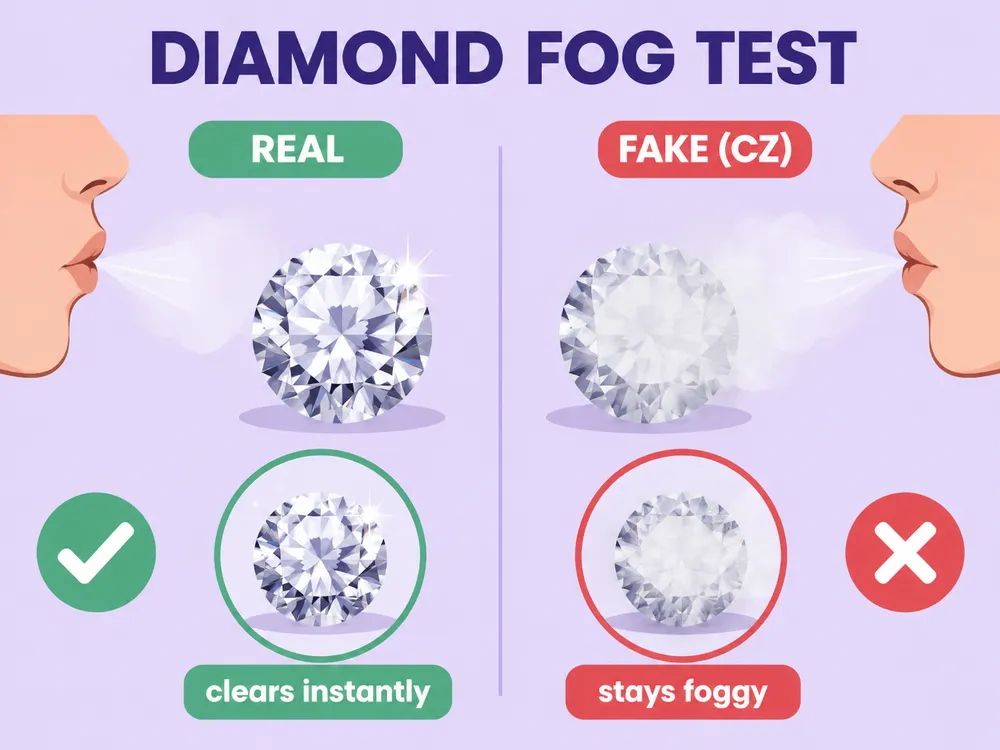
- Fog test: breathe on it — a real diamond clears almost instantly (it disperses heat), CZ and glass stay fogged a second or two.
- Moissanite shows extra rainbow "fire" and doubled facet edges under a loupe; diamond does not double.
- CZ is heavier and softer; only a thermal/electrical tester or a jeweller confirms it for sure.
Diamond guide

Frequently asked questions
How can I tell if a diamond is real?
No home test is conclusive, but a real diamond defogs almost instantly, is singly refractive (facets never look doubled), and is the hardest material (Mohs 10). CZ holds fog longer and is softer; moissanite shows extra fire and doubling. A jeweller’s thermal probe is the sure check.
What is Diamond worth?
Real Diamond and its imitations differ a lot in value — see the value guide. Imitations (glass, dyed or reconstituted material) are worth a small fraction of the genuine stone.