Real vs Fake Emerald
Worried your Emerald might be fake? Here’s how Emerald is imitated and the quick checks that tell the real thing apart — no lab needed for a first pass.
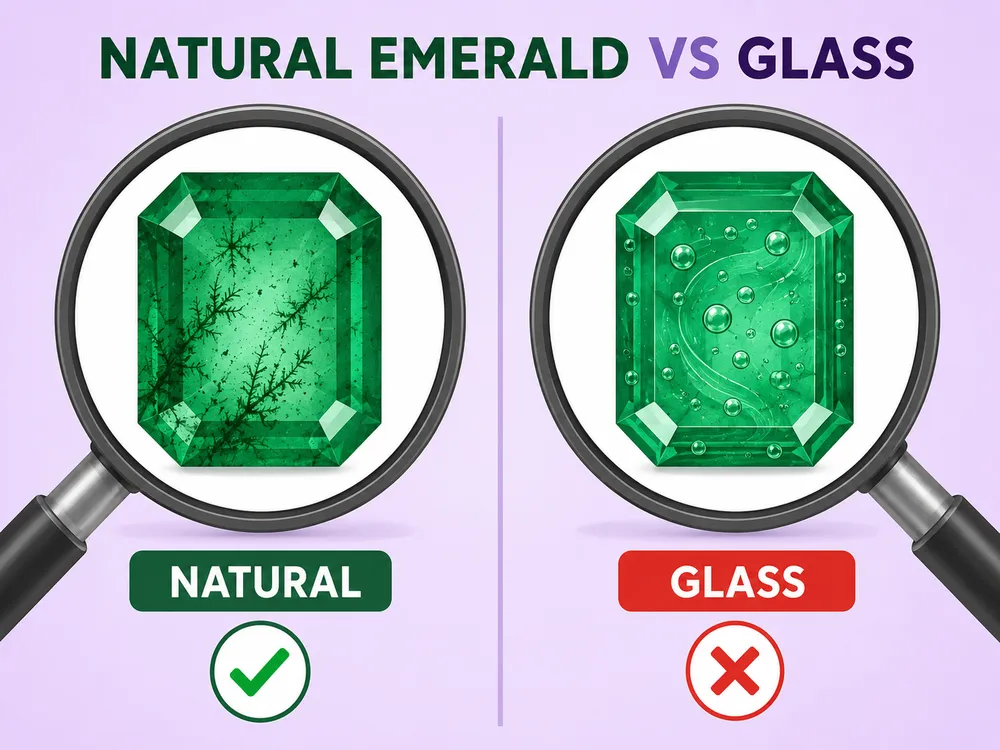
How Emerald is faked
The usual imitations: glass, hydrothermal/flux synthetics, heavily oiled or resin-filled stones, and beryl/quartz doublets with green cement.
Real vs fake Emerald at a glance
| Genuine Emerald | Imitation | |
|---|---|---|
| Inclusions | "Jardin" — irregular | Bubbles/swirls (glass) |
| Girdle | Clean | Green colour layer (doublet) |
| Synthetic | — | Wispy veil inclusions |
How to tell real Emerald
- Natural emerald has a "jardin" of irregular inclusions; glass shows round bubbles and swirl marks.
- A doublet shows a green colour layer at the girdle when viewed side-on.
- Synthetic flux emerald shows wispy veil-like inclusions; heavy filler (vs minor oil) sharply cuts value — ask for the treatment grade.
Emerald guide

Frequently asked questions
How do you tell a real emerald from glass or synthetic?
Real emerald shows a natural "jardin" of inclusions; glass has bubbles and swirls, and doublets reveal a green layer at the girdle. Hydrothermal synthetics look very clean with wispy veils. A lab report confirms natural vs synthetic and the degree of oiling.
What is Emerald worth?
Real Emerald and its imitations differ a lot in value — see the value guide. Imitations (glass, dyed or reconstituted material) are worth a small fraction of the genuine stone.