Real vs Fake Jadeite
Worried your Jadeite might be fake? Here’s how Jadeite is imitated and the quick checks that tell the real thing apart — no lab needed for a first pass.
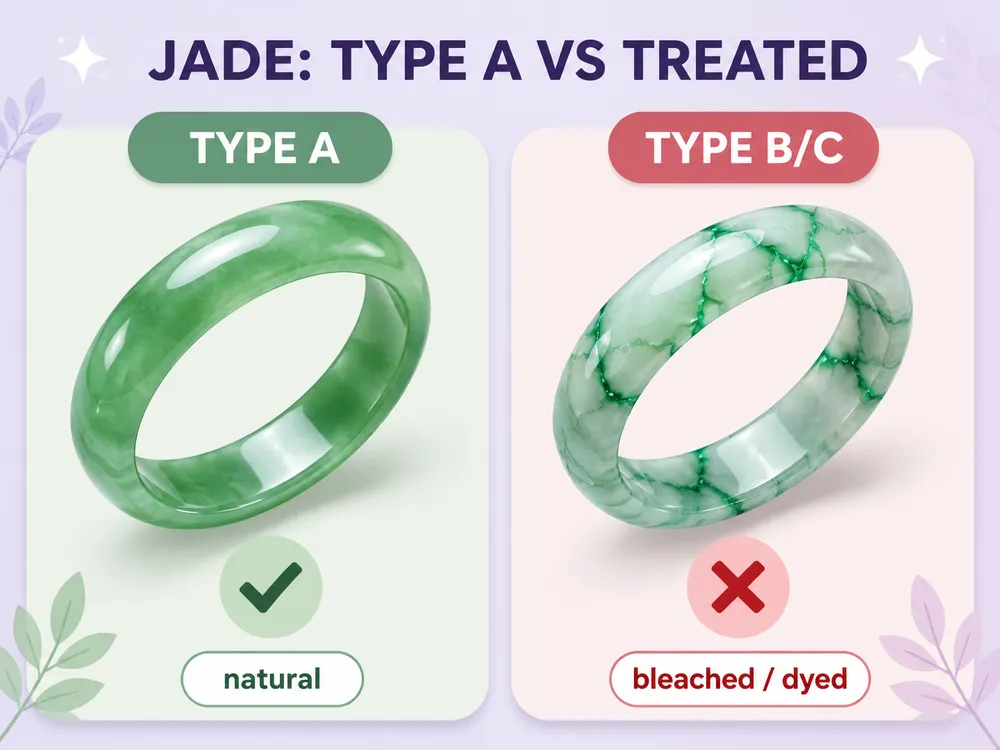
How Jadeite is faked
The usual imitations: Type B (bleached and polymer-impregnated) and Type C (dyed) jadeite, plus serpentine, quartzite and glass sold as "jade".
Real vs fake Jadeite at a glance
| Genuine Jadeite | Imitation | |
|---|---|---|
| Treatment | Type A (natural) | Type B/C bleached or dyed |
| Tap sound | Bright ring | Dull clack |
| Dye | None | Pooled in cracks |
How to tell real Jadeite
- Only Type A (natural, untreated) holds value; Type B/C and substitutes are a fraction of the price — insist on a lab report for anything expensive.
- Tap two pieces together: solid natural jade gives a clear, bright ring; treated/plastic sounds dull.
- Dye concentrated in the cracks, a too-even "imperial" green, or a suspiciously low price point to treatment or imitation.
Jadeite guide

Frequently asked questions
What is Type A vs Type B jade?
Type A is natural, untreated jadeite (only waxed) and is the valuable kind. Type B is bleached and polymer-filled; Type C is dyed. Both look similar but are worth far less — a gemmological certificate is the only sure way to know.
What is Jadeite worth?
Real Jadeite and its imitations differ a lot in value — see the value guide. Imitations (glass, dyed or reconstituted material) are worth a small fraction of the genuine stone.