Real vs Fake Larimar
Worried your Larimar might be fake? Here’s how Larimar is imitated and the quick checks that tell the real thing apart — no lab needed for a first pass.
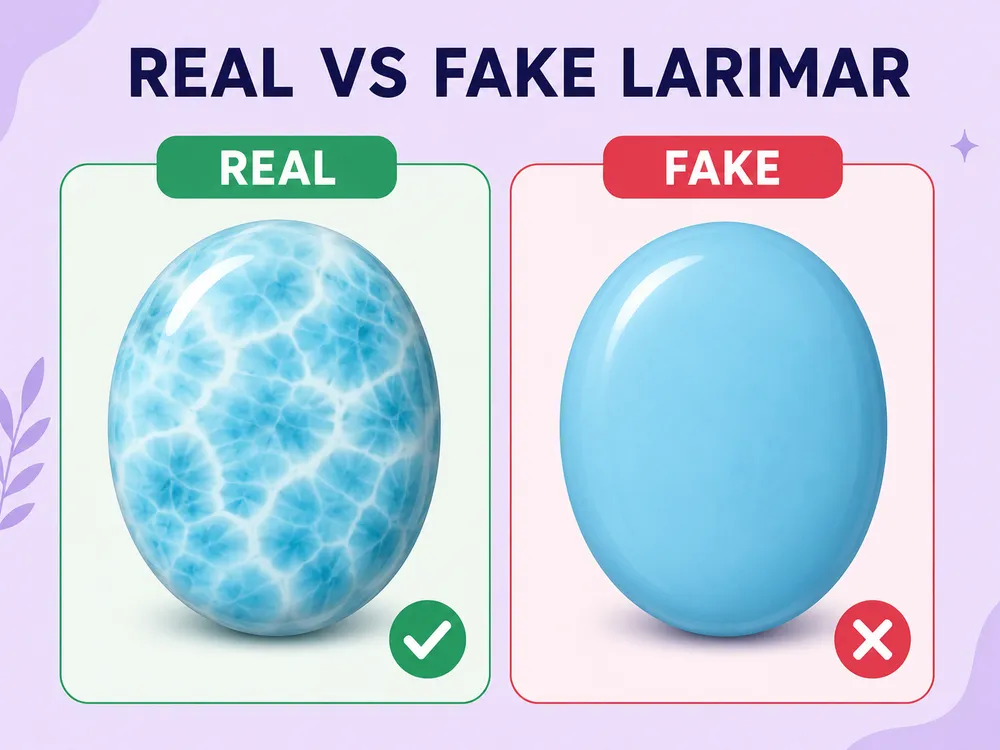
How Larimar is faked
The usual imitations: dyed howlite, painted/resin imitations and reconstituted blue powder.
Real vs fake Larimar at a glance
| Genuine Larimar | Imitation | |
|---|---|---|
| Pattern | Irregular blue-white web | Too-regular or painted |
| Source | Dominican Republic only | — |
| Hardness | Pectolite | Softer (dyed howlite) |
How to tell real Larimar
- Real larimar shows an irregular, natural blue-and-white pectolite pattern; fakes look too blue, too regular or painted-on.
- Imitations are softer or feel like plastic, and colour may sit only on the surface.
- Genuine larimar comes only from the Dominican Republic — extreme cheapness for vivid blue is a warning.
Larimar guide

Frequently asked questions
Is my larimar real?
Real larimar has a natural, irregular blue-white web pattern and comes only from the Dominican Republic. Dyed howlite or painted imitations look too uniformly blue, sit only on the surface, and are softer.
What is Larimar worth?
Real Larimar and its imitations differ a lot in value — see the value guide. Imitations (glass, dyed or reconstituted material) are worth a small fraction of the genuine stone.