Real vs Fake Moldavite
Worried your Moldavite might be fake? Here’s how Moldavite is imitated and the quick checks that tell the real thing apart — no lab needed for a first pass.
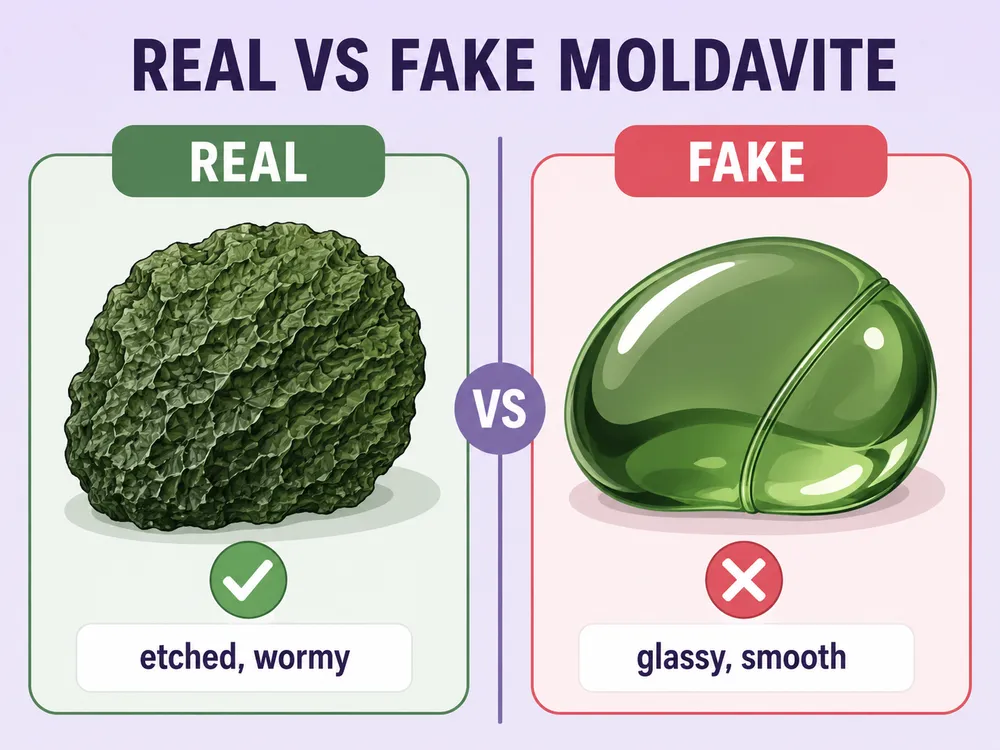
How Moldavite is faked
The usual imitations: green bottle-glass and moulded glass copies (a flood of them from China) sold as genuine tektite.
Real vs fake Moldavite at a glance
| Genuine Moldavite | Imitation | |
|---|---|---|
| Surface | Etched, wormy, matte | Glassy-smooth, mould seams |
| Bubbles | Few, elongated | Many, round |
| Size vs price | Small & pricey | Large & cheap = suspect |
How to tell real Moldavite
- Real moldavite has a natural etched, wormy, matte surface (schlieren); fakes look too glossy, smooth or mould-seamed.
- Trapped bubbles in real moldavite are elongated; round bubbles = glass.
- A large, flawless, cheap "moldavite" is almost always glass — genuine pieces are small and pricey.
Moldavite guide

Frequently asked questions
How can you tell real moldavite from fake?
Genuine moldavite has a rough, etched, wormy texture and elongated bubbles; glass fakes are glassy-smooth with round bubbles and mould seams. Real moldavite is also rare and expensive for its size, so suspiciously cheap large "moldavite" is the giveaway.
What is Moldavite worth?
Real Moldavite and its imitations differ a lot in value — see the value guide. Imitations (glass, dyed or reconstituted material) are worth a small fraction of the genuine stone.