Real vs Fake Pearl
Worried your Pearl might be fake? Here’s how Pearl is imitated and the quick checks that tell the real thing apart — no lab needed for a first pass.
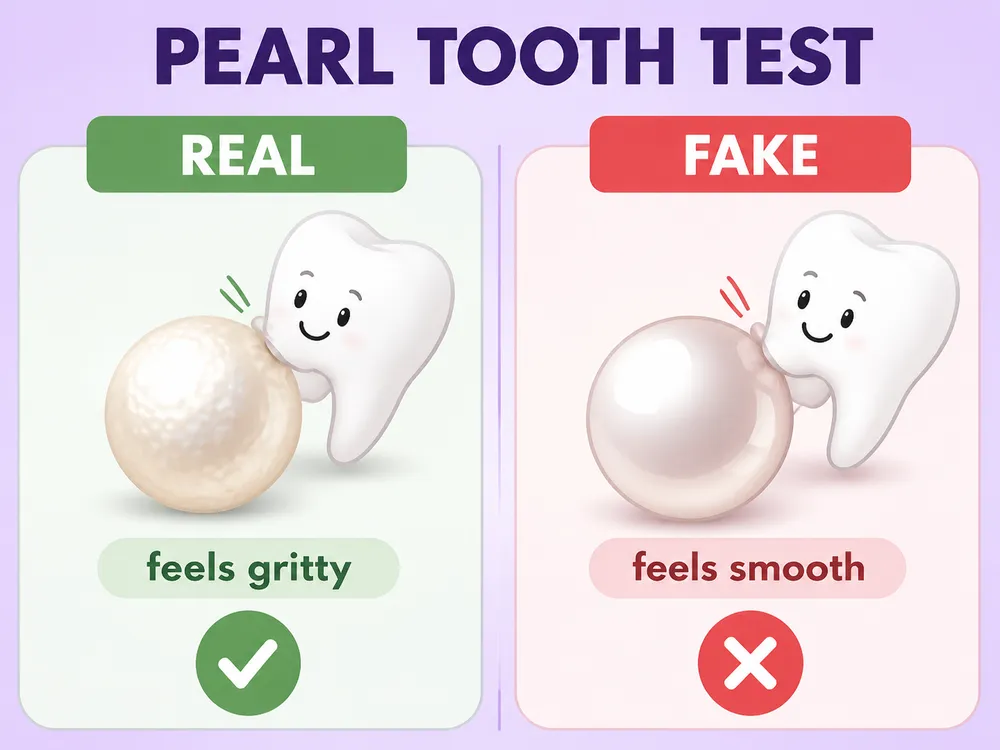
How Pearl is faked
The usual imitations: glass, plastic and coated "shell" or "faux" pearls sold as real cultured/natural pearls.
Real vs fake Pearl at a glance
| Genuine Pearl | Imitation | |
|---|---|---|
| Tooth rub | Gritty/sandy | Smooth, glassy |
| Surface | Tiny irregularities | Flawless mirror gloss |
| Drill hole | Crisp edge | Flaking coating |
How to tell real Pearl
- Tooth test: gently rub the pearl on your tooth edge — real pearls feel gritty/sandy, fakes feel smooth and glassy.
- Real pearls are cool to first touch and warm slowly; their surface shows tiny irregularities, not flawless mirror gloss.
- Drilled holes on real pearls have crisp edges; fakes often show flaking coating around the hole.
Pearl guide

Frequently asked questions
How do you tell real pearls from fake?
Rub it lightly against your tooth: real pearls (natural or cultured) feel slightly gritty, while glass and plastic feel perfectly smooth. Real pearls are cool to the touch, slightly irregular, and have clean drill holes; fakes look flawlessly glossy and may flake at the hole.
What is Pearl worth?
Real Pearl and its imitations differ a lot in value — see the value guide. Imitations (glass, dyed or reconstituted material) are worth a small fraction of the genuine stone.