Real vs Fake Ruby
Worried your Ruby might be fake? Here’s how Ruby is imitated and the quick checks that tell the real thing apart — no lab needed for a first pass.
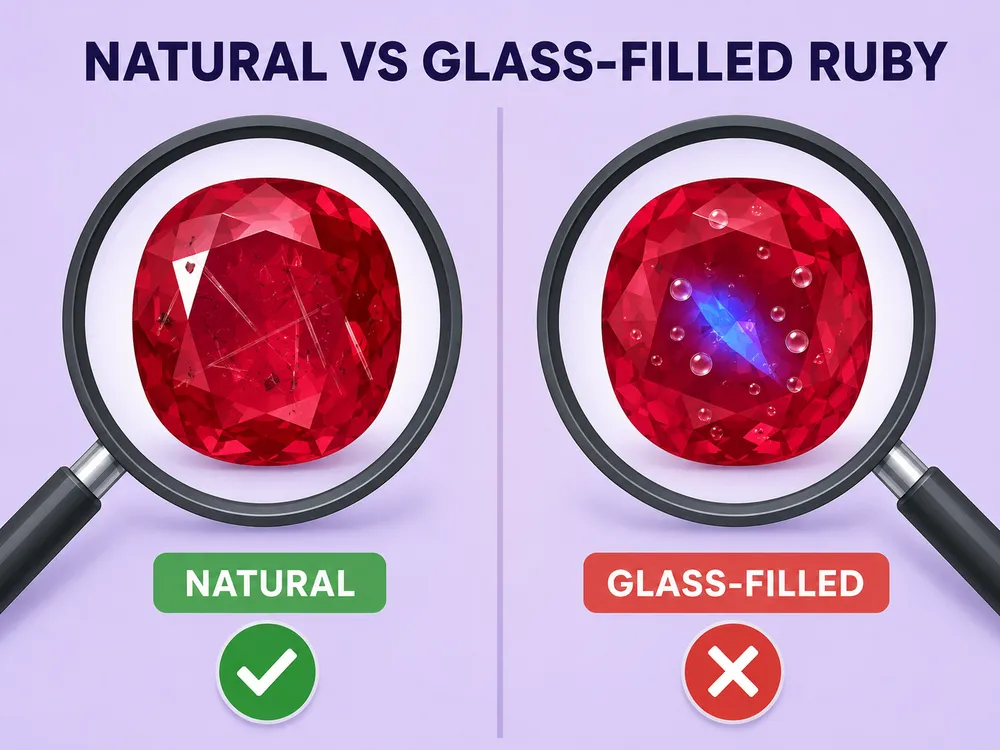
How Ruby is faked
The usual imitations: lead-glass-filled "composite" rubies, flame-fusion synthetics, and red glass or garnet substitutes.
Real vs fake Ruby at a glance
| Genuine Ruby | Imitation | |
|---|---|---|
| Under loupe | Natural angular inclusions | Blue flash + bubbles (glass-filled) |
| Growth | Straight zoning | Curved striae (synthetic) |
| Price | Matches quality | Too cheap = composite |
How to tell real Ruby
- Under magnification, glass-filled rubies show a blue/orange flash and trapped gas bubbles; price is suspiciously low for the size.
- Flame-fusion synthetics show curved growth lines (striae) rather than natural angular inclusions.
- For anything valuable, get a report from a recognised lab — glass-filled stones are worth a fraction of natural ruby.
Ruby guide

Frequently asked questions
What is a glass-filled ruby?
It is low-grade corundum whose fractures are filled with lead glass to look clearer and bigger. It shows flash effects and bubbles under magnification and is worth far less than a natural or simply heat-treated ruby — always check a lab report.
What is Ruby worth?
Real Ruby and its imitations differ a lot in value — see the value guide. Imitations (glass, dyed or reconstituted material) are worth a small fraction of the genuine stone.