Real vs Fake Sapphire
Worried your Sapphire might be fake? Here’s how Sapphire is imitated and the quick checks that tell the real thing apart — no lab needed for a first pass.
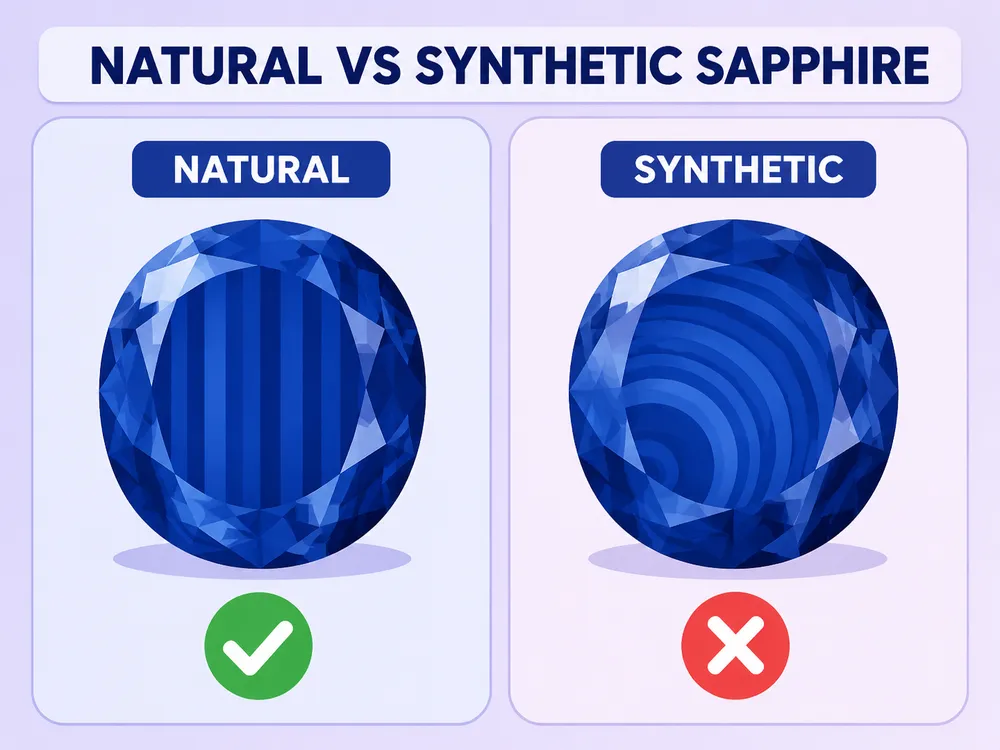
How Sapphire is faked
The usual imitations: flame-fusion synthetics, glass, surface-diffusion-treated stones and doublets.
Real vs fake Sapphire at a glance
| Genuine Sapphire | Imitation | |
|---|---|---|
| Zoning | Straight colour bands | Curved striae (synthetic) |
| Colour spread | Even | Concentrated at facet edges (diffusion) |
| Glass | Mohs 9 | ~5.5, round bubbles |
How to tell real Sapphire
- Synthetic sapphire shows curved growth striae; natural stones show straight colour banding and mineral inclusions.
- Diffusion-treated stones concentrate colour at facet junctions and edges — visible when immersed in water.
- Glass imitations feel warm, have round bubbles and scratch more easily (glass ~5.5 vs sapphire 9).
Sapphire guide

Frequently asked questions
How can you tell a real sapphire from synthetic?
Natural sapphire has straight colour zoning and mineral inclusions; lab-grown shows curved striae and sometimes gas bubbles. Glass is softer and warms quickly. Origin and treatment on a fine stone need a gemmological lab to confirm.
What is Sapphire worth?
Real Sapphire and its imitations differ a lot in value — see the value guide. Imitations (glass, dyed or reconstituted material) are worth a small fraction of the genuine stone.