Real vs Fake Tanzanite
Worried your Tanzanite might be fake? Here’s how Tanzanite is imitated and the quick checks that tell the real thing apart — no lab needed for a first pass.
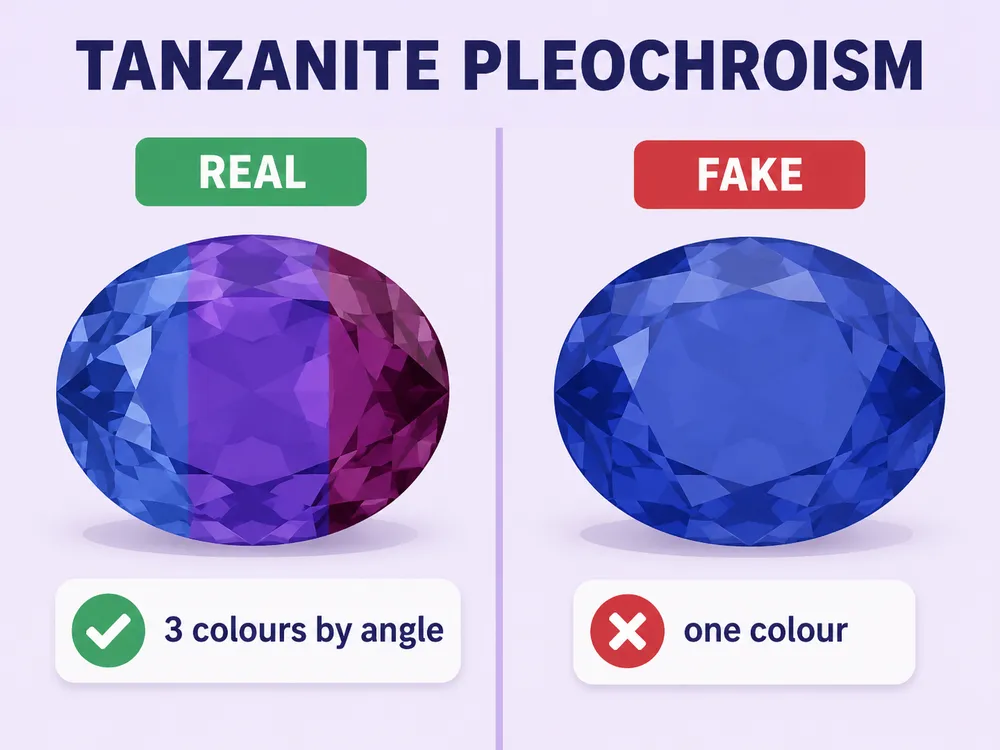
How Tanzanite is faked
The usual imitations: glass, synthetic forsterite, and coated or colour-painted quartz sold as tanzanite.
Real vs fake Tanzanite at a glance
| Genuine Tanzanite | Imitation | |
|---|---|---|
| Pleochroism | Blue / violet / burgundy by angle | One flat colour (simulant) |
| Coating | None | Scratches show wear |
| Clean + cheap + big | Costly | Suspect |
How to tell real Tanzanite
- Real tanzanite is strongly pleochroic — it flashes blue, violet and burgundy from different viewing angles; simulants show one flat colour.
- Coated stones reveal scratches or worn patches in the coating under magnification.
- A very cheap, perfectly clean, large "tanzanite" is suspect — natural clean material is costly.
Tanzanite guide

Frequently asked questions
How can you tell real tanzanite?
Turn the stone under light: genuine tanzanite shows three colours (blue/violet/burgundy) from different angles. Glass and forsterite simulants stay one colour, and coated quartz shows scratches in the coating.
What is Tanzanite worth?
Real Tanzanite and its imitations differ a lot in value — see the value guide. Imitations (glass, dyed or reconstituted material) are worth a small fraction of the genuine stone.