Crystals That Glow (UV-Reactive & Glow-in-the-Dark)
Some crystals glow under ultraviolet light — a striking identification clue. Fluorite literally gave fluorescence its name. This is a starter list; UV reaction varies by specimen and locality.
Shine an ultraviolet light on the right crystal in the dark and it lights up in surprising colours. It's one of the most fun ways to explore a collection — and a genuine identification clue. Here's what glows, and how to see it.
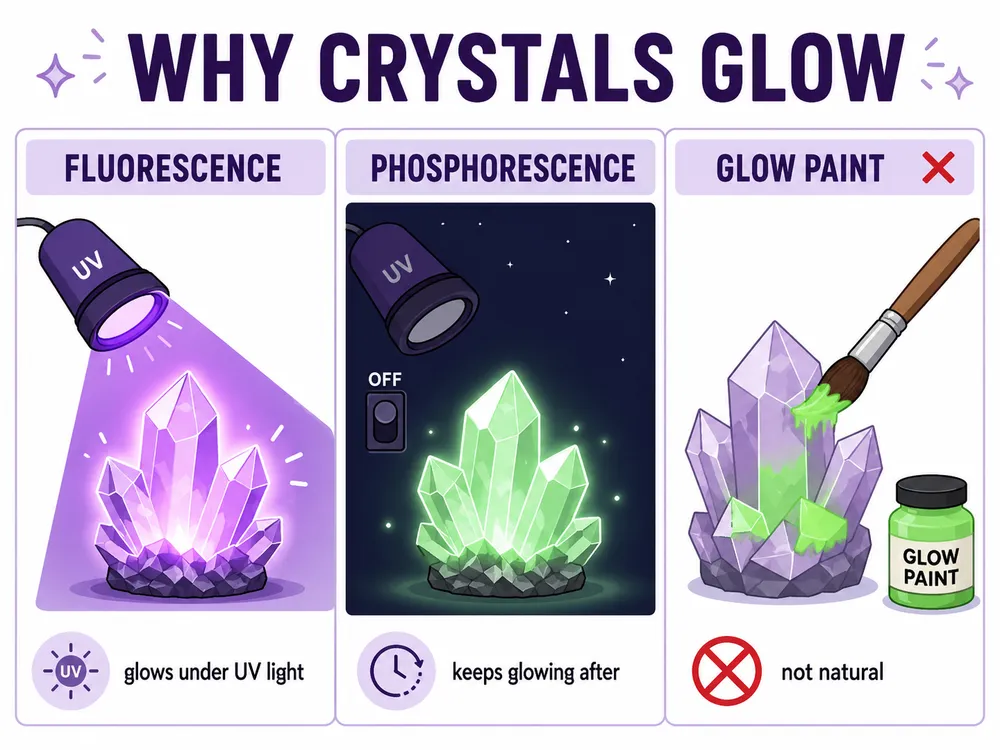
Crystals worth shining a UV light on
| Crystal | UV glow |
|---|---|
| Fluorite | Blue-violet — the classic glow |
| Yooperlite (sodalite-rich syenite) | Glowing orange veins — the "glowing rocks" of Lake Superior |
| Hyalite opal | Vivid neon green (uranium) |
| Calcite | Red, pink or orange |
| Hackmanite / sodalite | Orange — and changes colour in sunlight |
| Scapolite | Yellow to orange |
| Selenite | Blue-white to green |
| Amber | Bluish under long-wave UV |
Long-wave vs short-wave UV
A cheap long-wave (365 nm) UV torch lights up fluorite, amber, hackmanite and yooperlite. Many of the most dramatic reactions (willemite, calcite, scheelite) need a pricier short-wave (254 nm) lamp — and short-wave UV can burn eyes and skin, so wear UV-blocking glasses and never look at the bulb. Reaction depends on trace "activator" elements, so always test your own specimen — see the full fluorescent-minerals table.
Glow under UV vs glow in the dark
Most "glowing" crystals only glow while the UV lamp shines on them (fluorescence) and go dark the instant it's switched off. A few — some fluorite, calcite, willemite and hackmanite — keep glowing briefly afterwards (phosphorescence). Any crystal that glows on its own with no UV light at all has been coated in luminous paint — that's not natural.