Real vs Fake Agate
Worried your Agate might be fake? Here’s how Agate is imitated and the quick checks that tell the real thing apart — no lab needed for a first pass.
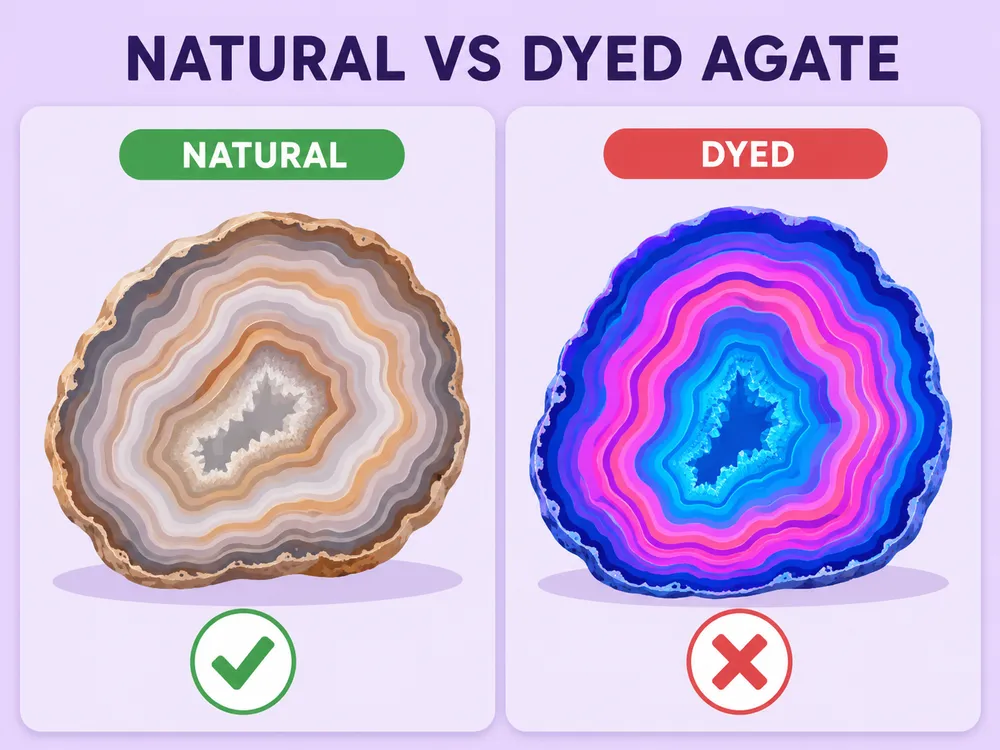
How Agate is faked
The usual imitations: dyed agate (bright unnatural blues, pinks and purples) sold without disclosure.
Real vs fake Agate at a glance
| Genuine Agate | Imitation | |
|---|---|---|
| Colour | Muted, varied | Electric, uniform (dyed) |
| Dye | None | Pooled in the bands |
| Honesty | Natural is prized | Dye should be disclosed |
How to tell real Agate
- Electric, candy-bright uniform colour — especially blue or magenta — is dye; natural agate tones are more muted and varied.
- Dye often pools more deeply in the porous bands, giving an unnaturally sharp colour contrast.
- Dyeing is not fraud if disclosed, but natural-colour agate is more prized — ask before you pay a premium.
Agate guide

Frequently asked questions
Is dyed agate fake?
Dyed agate is still real agate, just artificially coloured. Tell-tale signs are electric, uniform colours (vivid blue, pink, purple) and dye pooling in the bands. It is fine to buy if disclosed, but should not be sold as natural.
What is Agate worth?
Real Agate and its imitations differ a lot in value — see the value guide. Imitations (glass, dyed or reconstituted material) are worth a small fraction of the genuine stone.